PricingFor PractitionersFor ClientsFor InstitutionsHelp Center
GuideBeam logoGuideBeam logo
PricingFor PractitionersFor ClientsFor InstitutionsHelp Center
Sign In

We acknowledge the Ngunnawal people, the Traditional Custodians of the lands on which we work in Canberra. We honour their continuing culture and pay respect to Elders past and present. We recognise and celebrate the enduring contributions of Aboriginal and Torres Strait Islander peoples to learning, guidance, and community.

GuideBeam logoGuideBeam logo

GuideBeam helps you find your perfect career fit through AI psychometrics, future-skills mapping, and ethical, data-driven guidance.

© Copyright 2026 Guidebeam Pty Ltd. ABN 73 692 857 122. All rights reserved.

Thoughtfully crafted in Canberra, Australia.

About
  • For Institutions
  • For Practitioners
  • For Clients
  • Blog
  • Contact
Legal
  • Terms of Service
  • Privacy Policy
Follow Us
  • LinkedIn
  • X
Mar 19, 2026

The Career Counsellor's AI Dilemma: Will ChatGPT Replace You — Or Make You Indispensable?

AI can crunch labour market data and generate career suggestions in seconds. But it can't read the room, challenge a client's blind spots, or hold space for the anxiety behind "I don't know what I want to do." Here's why the counsellors who embrace AI tools will become more valuable — not less.

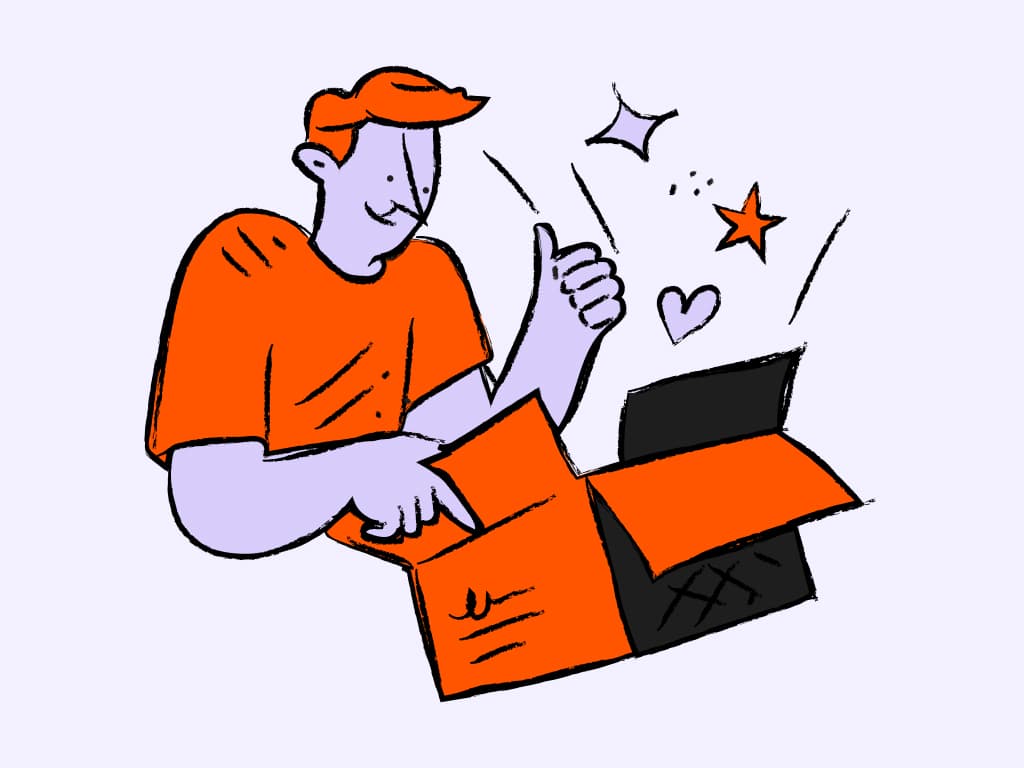
Cover Image for The Career Counsellor's AI Dilemma: Will ChatGPT Replace You — Or Make You Indispensable?

Let's address the uncomfortable question directly: should career counsellors be worried about ChatGPT?

The short answer is no. The longer answer is that you should be worried about ignoring it.

A recent survey found that 52% of Americans now somewhat trust AI tools like ChatGPT for career advice. Students are already using it — typing their grades, interests, and anxieties into a chatbot before they ever book a session with you. And at the 2025 NCDA Conference, keynote speaker Sonny Wong showed what happens when they do: AI offering generic job search tips in response to emotionally charged questions, making assumptions about barriers for people with disabilities, and operating on stereotypes that would get a human counsellor fired.

That's not competition. That's a gap only you can fill.

What AI Actually Does Well (And Where It Falls Apart)

Let's give credit where it's due. AI is genuinely good at processing volume. It can scan thousands of job postings in seconds, identify emerging skill demands across industries, and generate a reasonable first-pass career suggestion based on a handful of inputs. For students who have zero career guidance — and in many schools, that's the majority — even a mediocre AI recommendation is better than nothing.

But "better than nothing" is a low bar. And the limitations are serious.

ChatGPT isn't licensed or certified in any professional field. Its recommendations tend toward the generic — a "one-size-fits-all" approach that falls apart when applied to real human beings with contradictory desires, family pressures, and half-formed ambitions they can't quite articulate. It can't read body language. It can't sense the discomfort behind a confident-sounding answer. And it certainly can't do what the best counsellors do instinctively: challenge a client's assumptions about themselves.

As we've explored in our work on career blind spots, people systematically filter out careers they'd excel at based on stereotypes, limited exposure, and identity narratives. Surfacing those blind spots requires trust, rapport, and the kind of uncomfortable question a chatbot will never ask: "You say you hate sales — but have you actually tried it?"

The Real Threat Isn't Replacement. It's Irrelevance.

Here's the paradox. AI won't replace career counsellors, but it will replace career counsellors who do what AI does. If your sessions consist mostly of sharing labour market information, reviewing CVs, and running students through a personality quiz — that's automatable. And it's being automated right now.

The counsellors who thrive will be the ones who move up the value chain. Not information delivery, but interpretation. Not assessment administration, but the conversation that happens after the results come in. Not "here are your options" but "let's talk about why you keep dismissing the option that fits you best."

This is the shift that platforms like GuideBeam are designed to support. When a psychometric assessment across 12 domains can map a student's cognitive capabilities, personality, values, and risk tolerance to career clusters in minutes, the counsellor's job isn't to replicate that analysis — it's to make it meaningful. To sit with a student who just learned they have high fit for a career cluster they've never considered and help them make sense of that discovery.

The Augmented Counsellor

Nick Oliver, a Staff Engineer at career development platform Kuder, puts it well: AI is "not here to replace career counselors… it's here to assist the human in the loop, set the scene, and support experts in what they do best: empathize, guide, and connect with intention."

Think of it this way. A cardiologist doesn't feel threatened by an ECG machine. The machine provides data; the doctor provides judgment. The ECG made cardiologists more valuable, not less, because it gave them better information to work with.

AI career tools are your ECG. GuideBeam's assessment, for instance, doesn't just tell a student they might suit a particular career cluster. It reveals the gap between objective fit and subjective preference — where the harmony zones, stretch zones, and blind spots are. That's rich clinical material. But it only becomes transformative when a skilled counsellor helps the student integrate it into their lived experience, their family context, their fears, and their aspirations.

The emerging model — and the research supports this — is that a collaborative approach combining AI data with human guidance outperforms either one alone. AI handles the heavy lifting of research, trends, and pattern recognition. You bring the empathy, intuition, and nuance.

The Stakes Are Higher Than You Think

Here's what makes this moment so consequential. As we documented in The Entry-Level Extinction, entry-level job postings have collapsed 35% since 2023, and nearly 80% of hiring managers predict AI will compel companies to eliminate internships and entry-level roles entirely. Meanwhile, teenage uncertainty about career ambitions jumped from 24% to 39% in OECD countries between 2000 and 2022.

Your clients are more anxious, more confused, and facing a more volatile labour market than any previous generation. And many of them are turning to ChatGPT first — not because they trust it more than you, but because it's available at 11pm on a Sunday when the panic hits. Research from Frontiers in Education shows that generative AI is shifting career guidance from a purely human-reserved task to a "joint student-algorithm exercise." The question isn't whether AI will be part of your students' career exploration. It already is. The question is whether you'll be part of the conversation too.

What This Means for Your Practice

If you're a career counsellor or guidance practitioner, the practical implications are straightforward.

Adopt the tools. Students are already using AI for career advice. If you're not using AI-powered assessment and labour market data in your practice, you're working with less information than your clients have. Platforms like GuideBeam give you a structured, psychometrically validated starting point — far more rigorous than whatever ChatGPT generated for your student last night.

Redefine your value. Your value was never in information delivery. It was always in the relationship, the challenge, the reframe. AI just makes that distinction unavoidable. Lean into the work that only humans can do: exploring blind spots, navigating family expectations, holding space for ambivalence, and helping people make decisions they can live with.

Serve more students, better. One of the oldest problems in career guidance is scale. There have never been enough counsellors to go around. When AI handles the data-gathering and initial profiling, you can spend your limited time where it matters most — the conversations that change trajectories.

Stay curious, not defensive. The counsellors who attended Sonny Wong's NCDA keynote didn't leave scared — they left sharper. They saw exactly where AI fails and understood more clearly where their expertise is irreplaceable. Treat AI tools as case studies in what not to do, and you'll articulate your own value better than ever.

The Bottom Line

The career counsellors who will struggle are the ones who see AI as either a threat to resist or a trend to ignore. The ones who will thrive are those who recognise it for what it is: the best tool their profession has ever been given.

AI can process a student's psychometric profile in seconds. It cannot sit across from a 17-year-old who's terrified of disappointing their parents and help them find the courage to pursue what actually fits.

That's your job. And it just became more important than ever.


GuideBeam's practitioner platform combines rigorous psychometric assessment across 12 domains with career cluster mapping — giving counsellors the data-driven foundation they need to have deeper, more impactful conversations with their clients. Learn more about GuideBeam for practitioners.